


Emotional Regulation Doesn’t Mean Staying Calm

There is a message parents hear everywhere:
Stay calm.
Stay calm when your child screams.
Stay calm when they refuse to listen.
Stay calm when they hit their sibling.
Stay calm when you're late, exhausted, and asking them to put their shoes on for the fifth time.
But what happens when you aren't calm?
Because sometimes you won't be.
And we need to talk about that.
At The KéKAY Method, I don't want emotional regulation to become another impossible standard parents feel they are failing to meet.
Emotional regulation isn't about never becoming angry, frustrated, overwhelmed, or upset.
It's about developing greater awareness of what is happening inside us—and learning what we can do with those feelings.
You Don't Have to Eliminate the Feeling
Imagine your child has just done something that really triggers you.
Your heart may beat faster.
Your muscles may tense.
Your voice may start getting louder.
A thought might immediately appear:
“They are not going to speak to me like that.”
None of this makes you a bad parent.
You are having an emotional response.
The question isn't:
“How do I make myself calm?”
A more useful question may be:
“What do I want to do with what I'm feeling right now?”
You can still feel angry and lower your voice.
You can feel frustrated and decide not to lecture.
You can feel overwhelmed and say, “I need a minute before we talk about this.”
You can notice yourself getting louder and start again.
The emotion doesn't have to disappear before you make a different choice.

From “Stay Calm” to Conscious Modulation
This is where I want to introduce an idea we are talking about more at KéKAY:
Conscious modulation.
By this, I mean becoming aware of the intensity of our own response and intentionally adjusting what we can in the moment.
Maybe that's our volume.
Our pace.
Our words.
Our body language.
Or simply whether we respond immediately at all.
The goal isn't emotional perfection.
It's awareness followed by choice.
Sometimes we'll manage that beautifully.
Sometimes we won't.
And that's where another important skill comes in: repair.
What About Our Children?
The same principle matters when we think about children.
Our goal isn't to raise children who remain calm whenever life becomes difficult.
Children are going to be angry.
Disappointed.
Jealous.
Frustrated.
Embarrassed.
Overwhelmed.
Those feelings aren't failures of emotional regulation. They are part of being human.
What children are gradually learning is what to do when those feelings arrive.
Can I tell someone I'm angry instead of hitting?
Can I tolerate hearing “no,” even when I don't like it?
Can I ask for help?
Can I recover after something doesn't go my way?
Can I repair after I've hurt someone?
Can I eventually come back and talk about what happened?
These are skills.
And skills take practice.
Connection Before Direction
When a child is in the middle of a big emotional moment, adults often want to teach immediately.
We explain.
We reason.
We remind them of the rule.
We tell them why their behavior isn't acceptable.
But sometimes the lesson can wait.
Imagine your child is devastated because it's time to leave a friend's house.
Instead of beginning with:
“I told you ten minutes ago that we were leaving.”
Try beginning with connection:
“You really don't want to leave. You were having such a good time.”
And then hold the boundary:
“And it is still time to go.”
You haven't changed the answer.
You haven't removed the disappointment.
You haven't rewarded the behavior.
You've simply communicated:
I see what you're experiencing, and the boundary still stands.
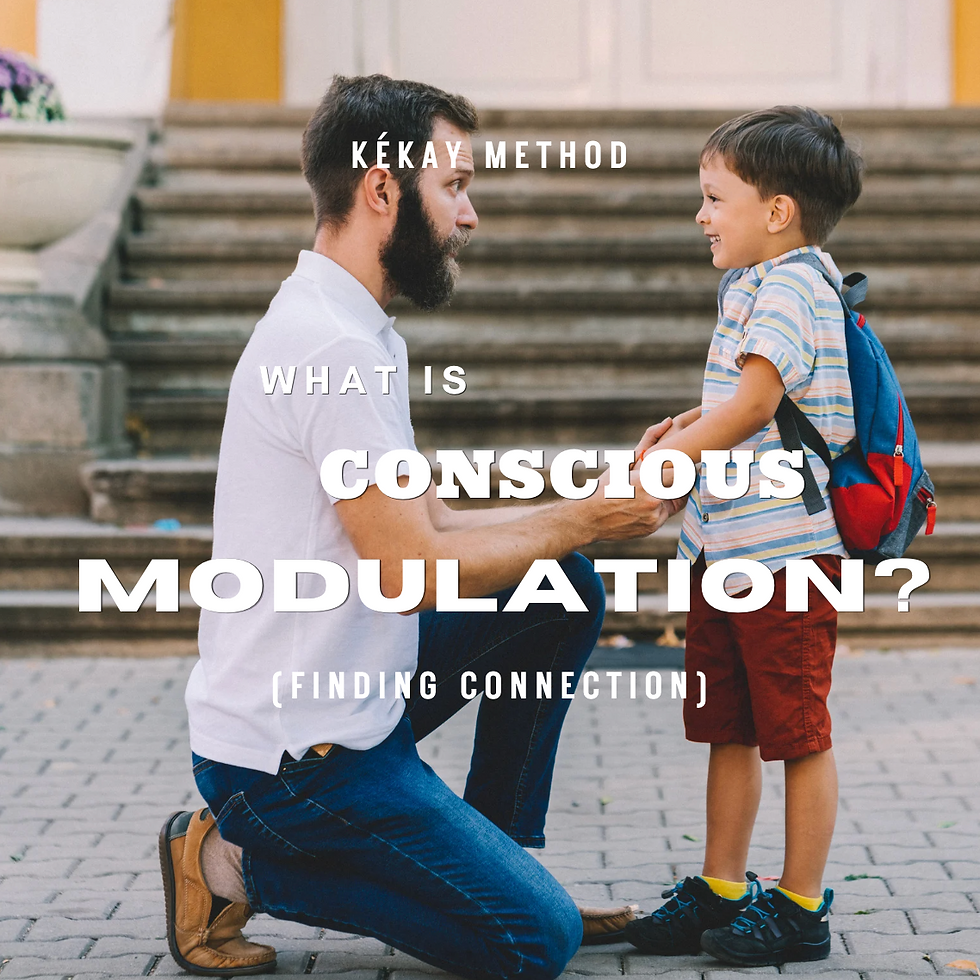
That's connection before direction.
Regulation Can Look Like Movement
Not every child processes emotion by sitting quietly and taking deep breaths.
Some children need to move.
They may walk.
Jump.
Stretch.
Run.
Dance.
Kick a ball.
Or simply change environments for a while.
Movement isn't a trick we use to make a child calm down.
At KéKAY, movement is part of how children experience their bodies, express themselves, learn, connect, and develop.
Sometimes movement gives a child—and an adult—space before returning to the conversation.
And sometimes that's enough.
Naming Feelings Can Help—But We Don't Have to Force It
Emotional vocabulary is valuable.
We can help children gradually learn words such as disappointed, frustrated, embarrassed, worried, jealous, excited, or overwhelmed.
But a child in the middle of an intense moment may not be ready to discuss or name what they're feeling.
We don't need to turn every emotional experience into a lesson while it's happening.
We can simply be present.
The conversation can come later.

When We Don't Handle It Well
There will be times when you yell.
Times when you react too quickly.
Times when you say something you wish you hadn't.
This is another reason I don't want parents measuring success by how consistently calm they can remain.
Relationships aren't built through perfect regulation.
They are also built through repair.
You can return and say:
“I was really frustrated earlier. It was okay for me to be frustrated, but I didn't like the way I spoke to you. I'm sorry.”
Notice what we're modeling there.
We aren't apologizing for having an emotion.
We're taking responsibility for what we did with it.
That distinction matters.
A Different Way to Think About Emotional Growth
Maybe emotional growth isn't:
“I don't get angry anymore.”
Maybe it's:
“I noticed I was getting angry sooner.”
Maybe it isn't:
“My child didn't have a meltdown.”
Maybe it's:
“My child was deeply disappointed and eventually came back to reconnect.”
Maybe it isn't:
“I stayed perfectly calm.”
Maybe it's:
“I caught myself, changed my response, and tried again.”
These are the small changes worth noticing.
At KéKAY, we're not chasing perfect calm.
We're helping adults and children develop greater awareness, communication, flexibility, connection, and the ability to make increasingly intentional choices.
Not perfectly.
Not every time.
But through practice, experience, and relationship.
Connection before direction.


Comments